Dreaming about a custom mountain home near Hendersonville is exciting, but the land itself can make or break the plan. A beautiful view does not always mean an easy build, and that can be hard to spot if you are focused on photos, layout ideas, or future porch sunsets. If you want to build with fewer surprises, it helps to understand how local site conditions, access, utilities, and permits fit together from the start. Let’s dive in.
Start With the Land, Not the House Plan
When you are planning a custom mountain home near Hendersonville, the first step is not choosing finishes or even finalizing your floor plan. It is making sure the homesite can support what you want to build. In this area, slope, soil, drainage, and access all matter early.
Henderson County points buyers to GISWeb and related county mapping resources to review deeds, flood data, landslide data, and soil information. That means your first pass on a property should be a map-based review of the lot itself, not just listing photos or a quick drive-by. A parcel may look ideal at first glance but still have important site limits.
Check Jurisdiction First
Before you spend time on design work, confirm whether the property is inside Hendersonville city limits or under county jurisdiction. Henderson County Permits & Inspections serves unincorporated Henderson County and also handles permit and inspection services for Hendersonville and some nearby towns through contract, while the City of Hendersonville manages its own planning, zoning, floodplain, and encroachment systems for work inside city limits.
That matters because the rules, review paths, and permit steps can differ depending on where the parcel sits. A smooth custom-build process often starts with knowing exactly which office and standards apply to your lot.
Understand Slope, Soil, and Drainage
Mountain lots are rarely simple, and Henderson County makes clear that septic site evaluation depends on more than just available space. Environmental Health considers topography, landscape position, soil characteristics, soil wetness, soil depth, restrictive horizons, and the room available for the system.
In practical terms, this means a lot that looks large enough on paper may still have limits on where a home or septic system can go. It also means the best house placement is often shaped by the land first, then refined by your design goals.
Drainage is another major factor. Henderson County also maintains a steep-slope procedure guide because certain steep sites need an erosion and sedimentation control plan before a building permit can be issued. If your lot will require meaningful grading, that review needs to happen early, not once the project is already underway.
Review Landslide and Flood Risk Early
In the Hendersonville area, slope stability is not something to leave until later. Henderson County has dedicated landslide mapping data, and the local history of heavy-rain debris flow in the county shows why drainage and hillside conditions deserve serious attention.
For you as a buyer, the takeaway is simple: review landslide data and ask questions about how water moves across the property before you finish the house design. If a lot has challenges, it is better to know that while you still have flexibility.
Floodplain review matters too. Henderson County requires a floodplain development permit for new development in a Special Flood Hazard Area, and the City of Hendersonville also requires floodplain permits in city floodplain areas. In both settings, floodplain rules can affect not only the home but also grading, paving, filling, and other site work.
Make Access a Separate Due Diligence Item
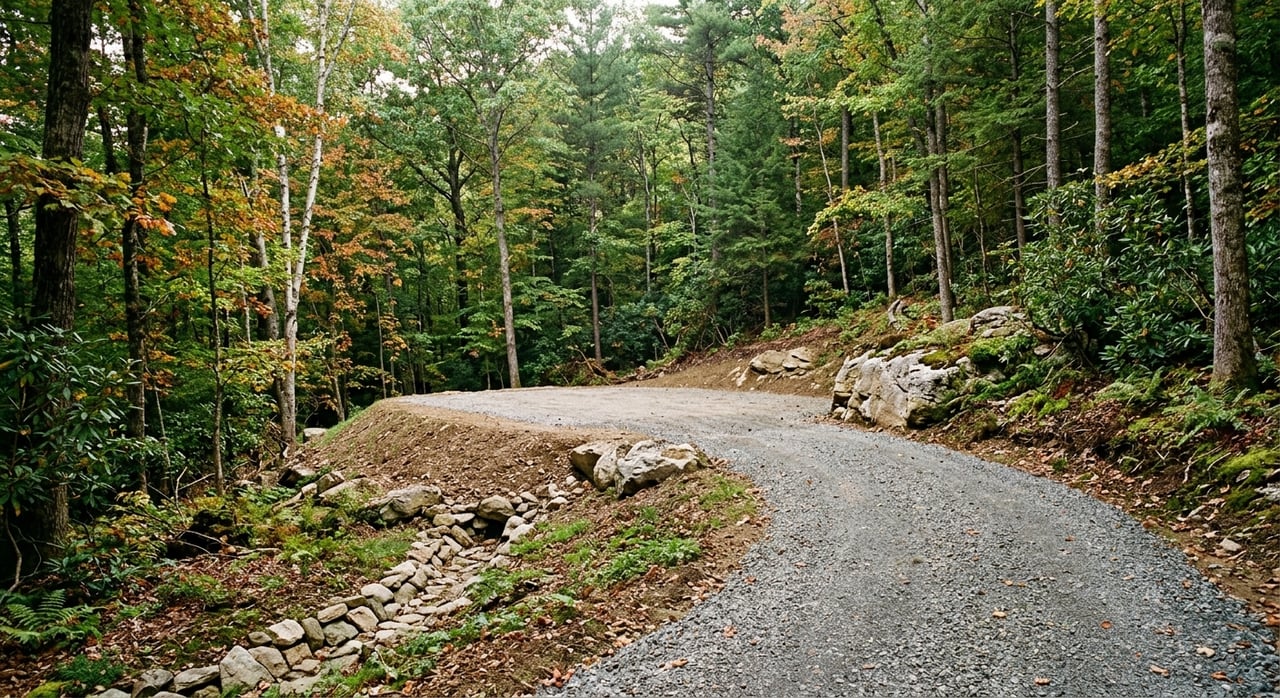
Access is one of the most overlooked parts of planning a custom home. You may have a buildable-looking site, but the road and driveway situation can still affect what is possible.
Henderson County says lots must abut a public or private right-of-way and need at least 30 feet of road frontage. The county also notes that road standards similar to NCDOT standards apply to both public and private roads.
It is also important to find out whether the road serving the property is public or private and who maintains it. Henderson County explains that private right-of-way may be maintained by a developer, a homeowners association, or the road users themselves. Under North Carolina law, buyers should be told whether the road is public or private and who is responsible for maintenance.
If your driveway will connect to a state highway, NCDOT says a driveway permit is required to obtain or modify access. If the lot is inside Hendersonville city limits and the driveway connects to a city street, the city requires a separate driveway permit application with an encroachment application, and the design must meet city standards for width, slope, drainage, and visibility.
Verify Septic and Well Feasibility
If a parcel is not served by public utilities, septic and well feasibility should be treated as a land issue, not just a construction issue. Henderson County requires a well permit before drilling a new well, repairing an existing well, or abandoning a well. Septic construction authorization is issued only after the lot has been evaluated and approved.
That is why many experienced buyers ask about septic and well feasibility before they get attached to a home design. If the lot cannot support the utility setup you need, the design may need to change, or the parcel may not be the right fit.
Know the Usual Permit Sequence
For a custom mountain home near Hendersonville, the order of operations matters. A practical local sequence is to confirm zoning and access first, then verify septic and well feasibility, then submit building plans, and after that move into grading, driveway, and floodplain approvals that may apply.
Henderson County’s building checklist for a new single-family home calls for several items that may include:
- A county or municipal zoning permit
- A watershed permit, if applicable
- An erosion or stormwater permit, if applicable
- Septic authorization, if applicable
- Water and sewer tap receipts, if applicable
- An NC lien agent appointment for projects over $40,000
This sequence helps you avoid designing a house that does not align with the lot’s real-world limits. It can also save time by surfacing key issues before the full construction package is ready.
Watch for Watershed and Steep-Slope Rules
Some properties near Hendersonville may also fall within mapped watershed areas. Henderson County notes that separate watershed permits may be required for structures or impervious surfaces in those areas.
On steeper sites, the county’s steep-slope guide makes clear that erosion control review comes before construction on certain lots. The plan should be prepared by a design professional and filed before work begins. This process is meant to reduce sediment and runoff impacts, which is especially important on mountain terrain.
Review Community Rules Beyond Zoning
Public zoning is only part of the story, especially in conservation-oriented communities. Recorded covenants, plat notes, easements, and open-space designations may all affect where you can place a house, driveway, fence, or clearing area.
Henderson County’s conservation subdivision standards apply to some larger subdivisions and may require permanent legal tools to protect open space. The county also notes that structures should be placed as close to internal roads as practical in those settings.
Inside the City of Hendersonville, conservation subdivision options are available only in certain zoning districts and for certain single-family detached subdivision layouts. Depending on the project, rezoning, subdivision review, or special use permits may involve Planning Board and City Council review.
For you, the practical takeaway is that neighborhood documents deserve the same attention as public permit checklists. A lot can be legally buildable and still have community-level restrictions that shape your final design.
Questions to Ask Before You Buy
If you are comparing homesites near Hendersonville, these are smart questions to ask early:
- Is the parcel under county jurisdiction or inside Hendersonville city limits?
- What do county mapping resources show for slope, soils, flood data, landslide data, deeds, and plats?
- Is the road public or private, and who maintains it?
- Does the lot have enough road frontage and a legal access point?
- Has septic and well feasibility been evaluated?
- Are floodplain, watershed, or erosion-control permits likely to apply?
- Are there covenants, easements, plat notes, or conservation rules that affect clearing or placement?
These questions can help you sort out whether a parcel fits your vision before you commit too much time, money, or energy.
Why Local Guidance Matters
Planning a mountain home is part real estate decision and part site strategy. Near Hendersonville, the land has to work for the house plan, the utilities, the driveway, and the permit path all at once.
That is where grounded local guidance can make a real difference. A team with land and community-development knowledge can help you look beyond the view and focus on what supports a successful build from the beginning.
If you are exploring homesites or planning a custom mountain home near Hendersonville, TFM Carolina can help you evaluate the setting, understand the moving parts, and move forward with clarity.
FAQs
What should you review first when planning a custom home near Hendersonville?
- Start with the land itself by reviewing mapping data, slope, soils, drainage, flood information, landslide data, access, and jurisdiction before finalizing a house plan.
Why does jurisdiction matter for a Hendersonville-area homesite?
- The permit path and approval process can differ depending on whether the parcel is inside Hendersonville city limits or under Henderson County jurisdiction.
How does septic approval affect a custom mountain home site?
- Henderson County evaluates septic feasibility based on factors like topography, soil characteristics, soil wetness, soil depth, restrictive horizons, and available space, so septic approval can shape where and how you build.
What access questions should you ask about land near Hendersonville?
- You should confirm whether the road is public or private, who maintains it, whether the lot has enough road frontage, and whether a driveway permit will be needed for access.
When do floodplain rules matter for a mountain homesite near Hendersonville?
- Floodplain rules matter anytime the parcel is in a mapped flood hazard area, and they may affect the home, grading, paving, filling, and other site work.
Can neighborhood rules limit what you build on a Hendersonville-area lot?
- Yes. Covenants, plat notes, easements, open-space designations, and conservation-community rules can all affect house placement, clearing, driveways, and other improvements.