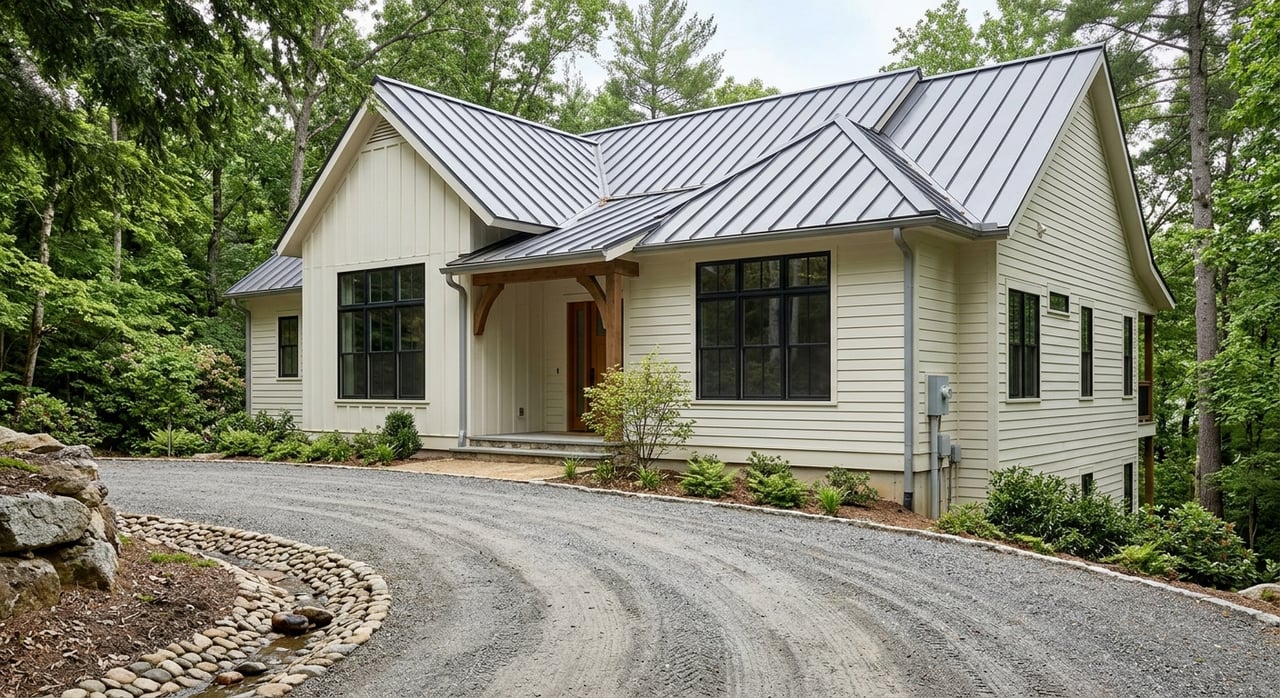
Buying land near Hendersonville can feel exciting right up until the practical questions start piling up. Can you build on it, reach it easily, connect utilities, and clear it without surprises? If you are hoping to buy a homesite, acreage, or a future custom-build lot, the smartest move is to look beyond the listing and focus on what the land can actually support. Let’s dive in.
Why buildability comes first
When you buy land near Hendersonville, the biggest question is often not price per acre. It is whether the property works for your goals.
In Henderson County, site conditions play a major role in what can be built. The county’s septic program notes that site evaluation considers topography, landscape position, soil characteristics, soil wetness, soil depth, restrictive horizons, and available space. That means a beautiful parcel still needs the right physical conditions to support development.
This matters even more in mountain settings, where views, slopes, and usable building areas often go hand in hand. A lot that looks ideal from the road may require more clearing, grading, or site work than you expect.
Check the land itself
Before you fall in love with a parcel, take a close look at the land’s physical traits. Soil, slope, drainage, and layout can all affect cost and design.
The USDA NRCS says soil surveys and Web Soil Survey data can help evaluate septic absorption fields, foundations, flooding, water tables, and slope. For buyers, that makes soil information more than a technical detail. It is part of understanding whether a lot fits your budget and building plans.
Topography affects more than views
In the Hendersonville area, views are often tied to elevation and slope. Those same features can influence driveway design, clearing needs, foundation work, and septic placement.
If you are comparing multiple parcels, do not assume a similar size means similar cost to build. One homesite may be much more straightforward than another, even if both look attractive online.
Clearing may need permits
Land prep is another area where local rules matter. Henderson County says brush-only clearing may qualify for a brush removal permit, but tree clearing, grading, or similar disturbance requires a soil erosion and sedimentation control plan.
If a project disturbs one acre or more, the county says plans must also include NPDES construction requirements. That is a key reason to ask early what kind of clearing your future homesite may need.
Access can change everything
A parcel is only as practical as its access. Road frontage, maintenance responsibility, and driveway approvals can all affect financing, timelines, and future use.
Henderson County explains that right-of-way is a form of easement, and North Carolina law requires sellers to disclose whether frontage right-of-way is public or private. If the road is private, you should find out who maintains it, because NCDOT does not maintain private streets.
Public road or private road?
This question matters more than many buyers realize. The county also notes that lenders often require road maintenance agreements for private streets, while VA loans require direct access to public streets.
That means the same parcel can look different depending on how you plan to finance the purchase. It is worth confirming road status before you get too far into due diligence.
State highway access may need a permit
If the property fronts a state highway, driveway access is not automatic. NCDOT says a driveway permit is required for any new or modified access to a state-maintained road.
NCDOT also says simple requests may be processed in about four weeks or less, while complex requests can take eight weeks or more. Since permit review covers design, drainage, traffic impacts, and safety, it is smart to raise these questions early.
Verify road maintenance carefully
You can use NCDOT’s Public Street Information Database to help check whether a road is state-maintained or private. NCDOT notes that this database is not a legal document, so buyers should still verify information through primary sources.
Henderson County also notes that permission is required to place driveway cuts, culverts, utilities, or structures in state right-of-way. Small details like these can affect both cost and timing.
Understand water, sewer, wells, and septic
Utility questions are some of the most important parts of buying land. In some areas near Hendersonville, public utilities may be available. In others, you may need septic, a well, or both.
The City of Hendersonville says its current sewer service area includes the city, portions of Laurel Park, the Village of Flat Rock, and part of the central county urban services area. Areas outside that network may rely on private systems.
If public utilities are available
For public water or sewer hookups, Henderson County’s permit FAQ says a plumbing permit is required. Buyers are also advised to contact the City of Hendersonville Water and Sewer Department or the Metropolitan Sewer District about tap fees.
If utility access is important to you, confirm availability directly and do not rely on assumptions based on nearby development.
If the lot needs septic
If sewer is not available, septic suitability becomes a major issue. Henderson County’s septic program says site evaluation depends on topography, soil characteristics, soil wetness, soil depth, restrictive horizons, and available space.
Once approved, the county issues an Authorization to Construct. After installation and inspection, it issues an Operations Permit. For smaller tracts, the county’s permit FAQ says a septic site evaluation application needs a zoning permit, a land survey if the parcel is under 2 acres, a site plan, and written authorization if the applicant is not the owner.
If the lot needs a well
For properties without public water, a private well may be needed. Henderson County says well permits are issued after site evaluation and approval, and newly constructed private wells in North Carolina must be tested within 30 days of completion.
The county also notes that septic contractors must be certified by the North Carolina Onsite Wastewater Contractor Inspector Certification Board. That is another reason to work with qualified local professionals from the start.
Review zoning and local overlays
Land near Hendersonville can fall under multiple layers of rules. Zoning is one part, but floodplain rules, watershed overlays, and conservation requirements may also apply.
Henderson County says a zoning permit is one of the first steps in development. Zoning must be approved before a new address is assigned or before Environmental Health or building permits are issued.
Start with zoning and jurisdiction
The county recommends using GISWeb to check zoning districts and permitted uses. It also offers zoning verification letters upon request.
Jurisdiction matters too. Henderson County Permits and Inspections serves unincorporated county areas and, through agreements, the City of Hendersonville and several nearby towns. If a parcel is near a town boundary, do not assume the same rules apply everywhere.
Flood risk is not always obvious
Flood review is also location-specific. Henderson County’s water resources pages connect buyers to FEMA flood map materials and the Flood Insurance Study, while the state flood portal can help users check risk by address.
The county also notes that review is jurisdiction-specific, and flood risk can extend beyond traditional regulatory floodplain boundaries. Even if a property is not obviously near water, flood-related questions still deserve attention.
Watershed rules can affect site plans
Some parcels are also subject to watershed overlay rules. Henderson County says its water supply watershed program applies to portions of unincorporated Henderson County and the Town of Laurel Park.
Overlay standards include subdistrict lot-size and built-upon-area limits that range from 20,000 to 80,000 square feet and from 6% to 24%, depending on the subdistrict. For buyers planning a custom home, guest structures, or larger paved areas, those limits can shape what is possible.
Watch for easements and conservation restrictions
Recorded restrictions can be just as important as zoning. Easements, HOA rules, and conservation documents may affect access, utilities, clearing, and how the property can be used over time.
Henderson County’s subdivision code says conservation subdivisions require 25% open space and that this open space must be protected in perpetuity by a conservation easement, restrictive covenant, or similar recorded instrument. The same code says HOA membership is mandatory and automatic if the HOA owns the open space, and that the association has lien authority to collect dues.
The county also notes that open space should, where possible, adjoin protected land, and lots should directly abut open space for views and access. If a parcel adjoins active agriculture, buffers or setbacks may also be required to reduce impacts such as noise, vibration, light, and odor.
A practical due diligence checklist
If you are serious about buying land near Hendersonville, a simple sequence can help you avoid wasted time. Henderson County’s GIS resources make a strong starting point because GISWeb can create printable maps and links to deeds search, real property data search, and tax lookup.
Use this order as a guide:
- Confirm access and road status.
- Check zoning and jurisdiction.
- Review floodplain and watershed overlays.
- Determine sewer availability or septic needs.
- Confirm whether a well may be needed.
- Review recorded easements.
- Check HOA, subdivision, or conservation restrictions.
- Ask what clearing or grading permits may apply.
Questions worth asking early
A few early questions can save you a lot of stress later:
- Is the frontage public or private?
- Who maintains the road?
- Is there a recorded easement for ingress, egress, or utilities?
- Is sewer available now, or will the lot need septic or a well?
- Is there enough usable area for septic?
- Is the parcel in a floodplain or watershed overlay?
- Will clearing require only brush removal, or a full erosion-control plan?
Bring in local experts early
Land purchases often move more smoothly when you build your team early in the process. Henderson County’s floodplain resources page links to professional listings for civil engineers, landscape architects, and land surveyors, and county processes often require a survey or site plan before reviews can move forward.
In practice, a surveyor, civil engineer, septic evaluator or designer, and sometimes a land-use attorney can be valuable early contacts. This is especially true when a property has private road access, steep terrain, deed restrictions, or utility questions.
Buying land near Hendersonville is rarely just about acreage. It is about terrain, access, utilities, and the local rules that shape what you can do with the property. If you want clear guidance as you compare homesites, acreage, or mountain parcels, TFM Carolina offers grounded local insight shaped by real land and community-development experience.
FAQs
What should you check first when buying land near Hendersonville?
- Start with access, zoning, floodplain or watershed overlays, and whether the parcel can support sewer, septic, or a well.
How does septic approval work for land in Henderson County?
- Henderson County evaluates topography, soils, wetness, depth, restrictive horizons, and available space before issuing septic approval documents.
Does a private road matter when buying land near Hendersonville?
- Yes. Private roads can affect maintenance responsibility, lender requirements, and whether a property meets certain loan guidelines.
Can you clear land freely on a parcel near Hendersonville?
- Not always. Brush-only clearing may qualify for a brush removal permit, but tree clearing, grading, or larger disturbance may require more review and erosion-control planning.
How can you verify zoning and parcel details for land near Hendersonville?
- Henderson County GISWeb is a useful starting point for checking zoning, maps, deeds search links, tax lookup, and other parcel-related details.